
Launch
How To Choose Your First App Promotion Channel
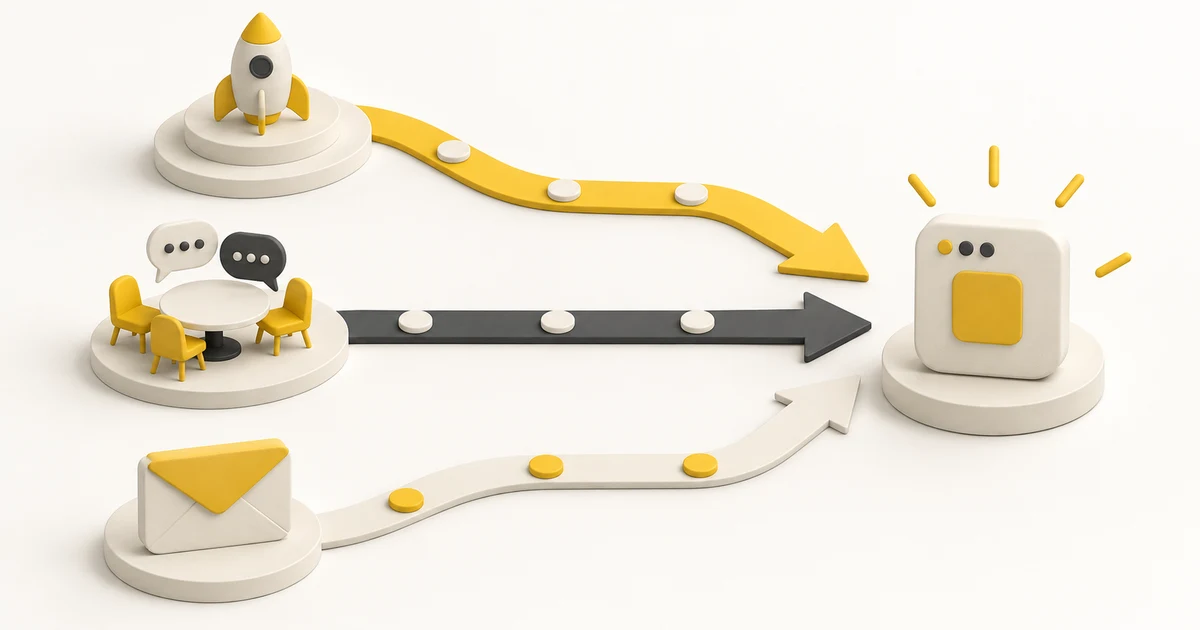
Choose your first channel by where relevant people already look for help, and whether you can take part usefully there. Start with one test you can support and measure before spreading the same launch message everywhere.
Use that first test to learn whether your invitation reaches the right people.
Define The Person And The Moment
Write one sentence naming who the app helps, what they're doing and what result it gives them. "Independent tutors planning next week's lessons" gives you more direction than "busy professionals."
Then ask where those people look when that task gets hard. A search, a specialist community, a colleague's recommendation and a product directory each serve a different moment.
Match The Channel To What You Can Show
If you have a clear demonstration, a short video or live example may help. If people ask detailed questions, a relevant community gives you room to answer. A directory can give you a stable product page, but you still need an accurate description and a working destination.
Check the channel's actual rules, audience and current activity before committing. Don't pick from a generic list of popular platforms and assume your buyer is there.
Budget For The Follow-Up
Count the time for writing the post, answering questions, helping people get started and recording what happened. A channel that produces more enquiries than you can handle is a poor first test.
If you pay for placement, define the spending limit and what you're buying. A prominent slot isn't a guaranteed number of tries or sales. Read the current terms before paying.
Run A Small, Defined Test
Choose one audience, message, destination and time period. State what you'll measure: relevant visits, completed trial tasks, useful conversations or another outcome you can actually see.
Use a dedicated campaign link if the destination supports it and your measurement respects the applicable privacy choices. Keep clicks separate from sign-ups and real use.
A handful of visits and no sales isn't proof the product is wrong. Read the replies and follow the route people took. The problem might be the audience, the promise, the page or the app - not the channel alone.
Decide What To Change Next
Keep going if the test reaches the right people and you can support the next step. Change the message if people misunderstand the offer. Try another channel if the people you need aren't there.
Write down the reason so the next experiment builds on what you learned. Don't change the audience, headline, price and channel all at once; you won't know which change mattered.
If a directory fits your test, PLTFORM's board offers a free product listing. Start by checking that the page and outbound link describe your app accurately. Paid visibility is optional - treat it as a separate spending decision.